Messaging systems have become a fundamental component of modern distributed applications, enabling communication between different services, applications, and systems. As businesses move towards microservices architectures and cloud-based solutions, the need for efficient and scalable communication mechanisms has grown exponentially. Messaging systems allow asynchronous communication, decoupling components and ensuring that systems remain responsive and reliable. In such an environment, RabbitMQ stands out as one of the most popular and widely used message brokers, providing a reliable and flexible platform for managing the flow of messages between systems.
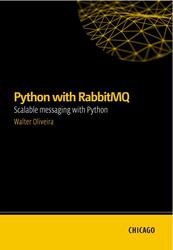
RabbitMQ architecture.
RabbitMQ is a powerful and widely-used messaging broker that implements the Advanced Message Queuing Protocol (AMQP). It enables communication between distributed applications by providing a reliable and scalable method to handle asynchronous messaging. Its architecture is designed to efficiently manage and route messages between producers (senders) and consumers (receivers), facilitating decoupling of system components. This separation of concerns is vital in modern software development, where systems often need to scale independently, handle high traffic loads, and maintain fault tolerance. Understanding the underlying architecture of RabbitMQ is essential for utilizing its full potential in building distributed applications, especially when using it alongside Python.
The architecture of RabbitMQ is centered around key components like exchanges, queues, and bindings, which work together to ensure that messages are delivered accurately and efficiently. At the core of RabbitMQ’s design is the concept of messaging patterns, where producers send messages to exchanges, which then route those messages to appropriate queues based on defined routing rules. The queues hold the messages until a consumer retrieves and processes them. RabbitMQ’s robust architecture is designed to handle complex routing scenarios, ensuring that messages reach their intended recipients with high reliability and minimal delay. This makes RabbitMQ an essential tool for applications that require high availability, fault tolerance, and real-time data exchange.
Content.
1 - Introduction to Messaging and RabbitMQ.
1.1 - What is messaging?.
1.1.1 - Synchronous vs. asynchronous messaging.
1.1.2 - Benefits of messaging.
1.2 - What is RabbitMQ?.
1.2.1 - History and evolution of RabbitMQ.
1.2.2 - Why choose RabbitMQ?.
1.3 - RabbitMQ architecture.
1.3.4 - Exchanges and routing types.
1.3.2 - Queues and messages.
1.3.3 - Bindings and routing rules.
1.4 - AMQP protocol and its relation to RabbitMQ.
1.4.1 - Characteristics of AMQP.
1.4.2 - Other protocols supported bv RabbitMQ.
1.5 - RabbitMQ use cases.
1.5.1 - RabbitMQ in microservices architectures.
1.5.2 - Using RabbitMQ in asynchronous task queues.
1.5.3 - RabbitMQ integration with other systems.
1.6 - RabbitMQ installation and initial setup.
1.6.1 - Installing RabbitMQ.
1.6.2 - Initial setup.
1.6.3 - First tests with RabbitMQ.
2 - Installation and Configuration of RabbitMQ.
2.1 - Overview of RabbitMQ.
2.1.1 - Messaging Model.
2.1.2 - Comparison with Other Solutions.
2.2 - Requirements for Installation.
2.3 - Installation on Linux.
2.3.1 - Installation on Ubuntu/Debian.
2.3.2 - Installation on CentOS/RHEL.
2.4 - Installation on Windows.
2.5 - Installation on Docker.
2.6 - Basic Configuration of RabbitMQ.
2.7 - Management via Web Panel.
2.8 - Management via Command Line.
2.9 - User and Permission Management.
2.10 - Integration with Python.
3 - Introduction to Pika: Consumers and Producers.
3.1 - What is Pika and why use it?.
3.2 - Installing and configuring Pika.
3.3 - Understanding connections and channels.
3.4 - Creating a producer with Pika.
3.5 - Creating a consumer with Pika.
3.6 - Message acknowledgment.
3.7 - Persistent messages and durable queues.
3.8 - Asynchronous publishing and consumption.
3.9 - Error handling and automatic reconnection.
3.10 - Working with multiple queues.
3.11 - Practical example: microservices communication.
4 - Exchanges and Routing Types.
4.1 - Introduction to Exchanges in RabbitMQ.
4.2 - Direct Exchange: Direct Routing.
4.3 - Fanout Exchange: Message Broadcasting.
4.4 - Topic Exchange: Pattern-Based Routing.
4.5 - Headers Exchange: Header-Based Routing.
4.6 - Bindings and Routing Keys.
4.7 - Use Cases for Each Exchange Type.
4.8 - Configuring Exchanges in RabbitMQ.
4.9 - Persistent and Ephemeral Messages.
4.10 - Advanced Routing with Multiple Exchanges.
4.11 - Monitoring and Debugging Routing.
4.12 - Performance and Best Practices for Using Exchanges.
5 - Managing Asynchronous Tasks with Celery.
5.1 - Introduction to Celery and Its Integration with RabbitMQ.
5.2 - Installing and Configuring Celery with RabbitMQ.
5.3 - Defining Tasks and Structuring Code.
5.4 - Running Workers and Monitoring Tasks.
5.5 - Using Priority' Queues in Celery.
5.6 - Retries and Failure Handling.
5.7 - Storing and Retrieving Results.
5.8 - Distributing Tasks Across Multiple Servers.
5.9 - Using Beat for Task Scheduling.
5.10 - Security' and Best Practices in Celery Usage.
6 - RabbitMQ with Asyncio and aio-pika.
6.1 - Introduction to aio-pika.
6.2 - Installation and configuration of aio-pika.
6.3 - Publishing messages asynchronously.
6.4 - Consuming messages with asyncio.
6.5 - Managing asynchronous connections and channels.
6.6 - Using prefetch and parallelism in consumers.
6.7 - Error handling and unprocessed messages.
6.8 - Integrating aio-pika with web applications and APIs.
6.9 - Monitoring and logging in asynchronous applications.
6.10 - Use cases and real-world examples.
7 - Scalability and High Availability.
7.1 - Introduction to Scalability and High Availability.
7.2 - Clustering in RabbitMQ.
7.2.1 - Cluster Configuration.
7.2.2 - Communication and Synchronization Between Nodes.
7.3 - Queue Types and Message Replication.
7.3.1 - Classic Queues vs. Quorum Queues.
7.3.2 - Mirrored Queue Configuration.
7.4 - Load Balancing in RabbitMQ.
7.4.1 - Round-Robin and Fair Dispatch.
7.4.2 - Using External Load Balancers.
7.5 - Message Persistence and Durability.
7.5.1 - Persistent Messages and Durable Exchanges.
7.5.2 - Delivery' Acknowledgments and ACKs.
7.6 - Cluster Management and Monitoring.
7.6.1 - Using the RabbitMQ Management Plugin.
7.6.2 - Monitoring with Prometheus and Grafana.
7.7 - Failure Recovery' Strategies.
7.7.1 - Failover and Automatic Node Switchover.
7.7.2 - Timeout and Retry Configuration.
8 - Security in RabbitMQ: Authentication and Authorization.
8.1 - Overview of Security in RabbitMQ.
Бесплатно скачать электронную книгу в удобном формате, смотреть и читать:
Скачать книгу Python with RabbitMQ, Scalable messaging with Python, Oliveira W. - fileskachat.com, быстрое и бесплатное скачивание.
Скачать epub
Ниже можно купить эту книгу, если она есть в продаже, и похожие книги по лучшей цене со скидкой с доставкой по всей России.Купить книги
Скачать - epub - Яндекс.Диск.
Дата публикации:
Теги: учебник по программированию :: программирование :: Oliveira
Смотрите также учебники, книги и учебные материалы:


Следующие учебники и книги:




Предыдущие статьи: