In the ever-evolving landscape of web development, Django and MongoDB have emerged as powerful tools in building modern, scalable applications. Django, a high-level Python web framework, simplifies the development of robust web applications by providing a clean, pragmatic design with features like authentication, form handling, and an ORM for managing databases. MongoDB, on the other hand, is a NoSQL database that offers flexibility and scalability, making it particularly well-suited for projects requiring quick data retrieval, horizontal scaling, and large volumes of unstructured data. While Django traditionally uses relational databases like PostgreSQL or MySQL, the combination of Django with MongoDB offers an innovative approach to building data-driven web applications.
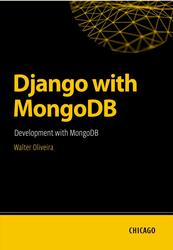
What is MongoDB?
MongoDB is a NoSQL database that differs fundamentally from traditional relational databases. Unlike relational databases, which store data in tables with rows and columns, MongoDB stores data in documents using a format called BSON (Binary JSON). BSON is a binary-encoded representation of JSON-like documents, which allows for the storage of complex data structures. This flexible format is one of MongoDB’s most important features, as it allows for the storage of nested data, arrays, and other complex types, making it highly suitable for modern, data-driven applications.
One of the key advantages of MongoDB is its schema-less nature. This means that the structure of data can vary from document to document within the same collection. Unlike relational databases, where the schema must be predefined and all rows in a table must adhere to the same structure, MongoDB provides more flexibility. You can add new fields or change existing ones without disrupting the overall data structure, making it easier to evolve the application’s data model over time.
CONTENTS.
1 - Introduction to Django and MongoDB.
1-1 - Introduction to Django.
1-2 - History' and Evolution of Django.
1-3 - What is MongoDB?.
1-4 - Main Features of MongoDB.
1-5 - Django and MongoDB: How Do They Complement Each Other?.
1.6 - Differences Between Django and MongoDB.
1-7 - Advantages of Integrating Django with MongoDB.
1-8 - Use Cases for Django with MongoDB.
1-9 - Initial Setup of Django with MongoDB.
1-10 - Alternatives to MongoDB in Django.
2 - Development Environment Setup.
2-1 - Python and Django Installation.
2.2 - MongoDB Installation.
2-3 - MongoDB Configuration for Django.
2-4 - Integration Libraries Installation.
2-5 - Django Configuration for Use with MongoDB.
2-6 - Verifying the Connection Between Django and MongoDB.
2-7 - Creating a Test Project in Django.
2-8 - Virtual Environment Setup with venv.
2-9 - Testing Installation and Configuration.
2-10 - Troubleshooting Common Issues.
3 - Fundamentals of MongoDB and Data Modeling.
3-1 - Introduction to MongoDB.
3-2 - MongoDB Architecture.
3-3 - Documents and Collections.
3-3-1 - Documents in MongoDB.
3-3-2 - Collections in MongoDB.
3-4 - Data Types in MongoDB.
3-5 - Data Modeling in MongoDB.
З-5-1 - Embedded vs. Referential Modeling.
3-5-2 - Modeling for Performance and Scalability.
3-6 - Indexes in MongoDB.
3-7 - Basic Operations in MongoDB.
З-7-i - Create and Read Operations.
3-7-2 - Update and Delete Operations.
3-8 - Backup and Recovery Strategies in MongoDB.
3-9 - Transactions in MongoDB.
4 - Integrating Django with MongoDB: Djongo and MongoEngine.
4-1 - Introduction to Djongo.
4-2 - Configuring Djongo in Django.
4-3 - Working with Models in Djongo.
4-4 - Introduction to MongoEngine.
4-5 - Configuring MongoEngine in Django.
4-6 - Working with Models in MongoEngine.
4-7 - Advantages and Disadvantages of Djongo and MongoEngine.
4-8 - Queries and Aggregations with Djongo.
4-9 - Queries and Aggregations with MongoEngine.
4-10 - Managing Relationships with Djongo and MongoEngine.
5 - Replacing the Django ORM: Challenges and Solutions.
5-1 - Understanding the Differences Between Django ORM and MongoDB.
5-2 - Queries and Filters: The New Approach with MongoDB.
5-3 - Data Modeling: From Relational to Documents.
5-4 - Relationships in MongoDB: Challenges and Strategies.
5-5 - Performance and Scalability with MongoDB.
5-6 - Transactions in MongoDB: Differences Compared to Django ORM.
5-7 - Data Migration: From Relational Databases to MongoDB.
5-8 - Django and MongoDB Integration: Libraries and Tools.
5-9 - Connection Management and Synchronization with MongoDB.
5-10 - Common Errors and Solutions When Using MongoDB in Django.
6 - Working with Advanced Queries in MongoDB.
7 - Managing Data: Validation, Migrations, and Performance.
7-1 - Data Validation with MongoDB in Django.
7-1.1 - Field Validation in Django Models.
7-1-2 - Validation Integration with MongoEngine.
7-2 - Database Migrations with MongoDB.
7-2.1 - Migration Challenges in MongoDB.
7-2-2 - Alternatives for Managing Migrations.
7-3 - Query Optimization in MongoDB with Django.
7-3-1 - Using Indexes to Improve Performance.
Бесплатно скачать электронную книгу в удобном формате, смотреть и читать:
Скачать книгу Django with MongoDB, Development with MongoDB, Oliveira W. - fileskachat.com, быстрое и бесплатное скачивание.
Скачать epub
Ниже можно купить эту книгу, если она есть в продаже, и похожие книги по лучшей цене со скидкой с доставкой по всей России.Купить книги
Скачать - epub - Яндекс.Диск.
Дата публикации:
Теги: учебник по программированию :: программирование :: Oliveira
Смотрите также учебники, книги и учебные материалы:

Следующие учебники и книги:
Предыдущие статьи: